

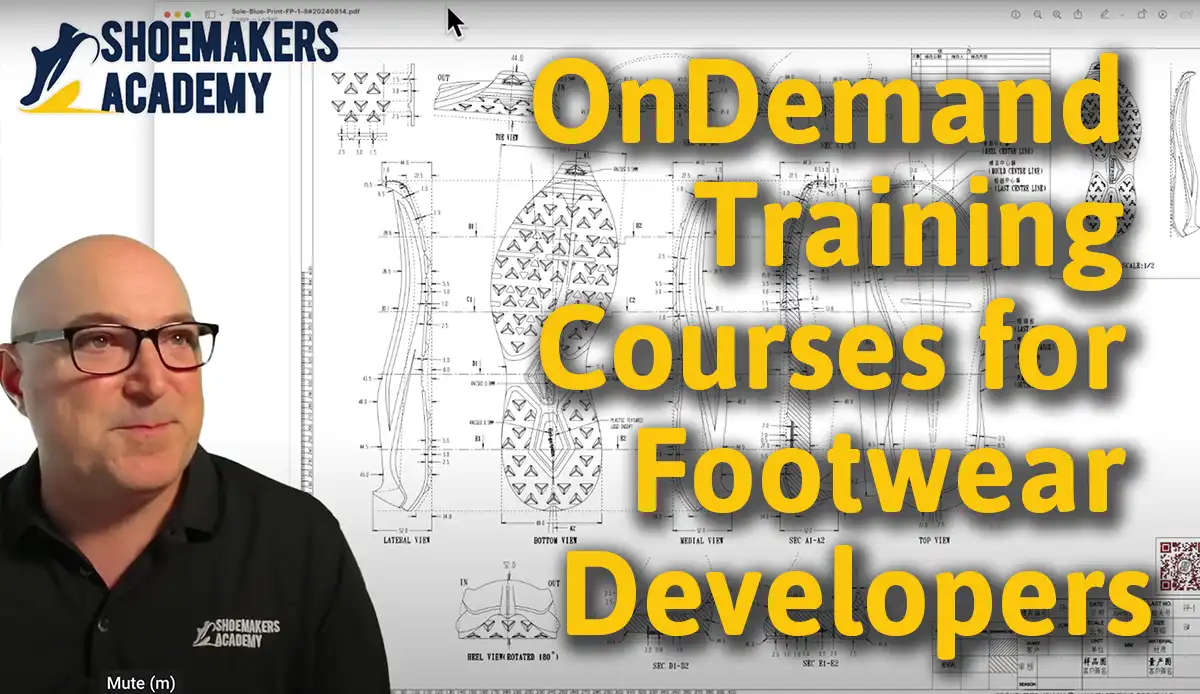
Footwear Developer Career Training
Build the Technical Skills to Take Shoes From Concept to Production
A great footwear developer turns creative ideas into products that can actually be manufactured.
Footwear developers work between design, engineering, materials, costing, sourcing, factories, quality, fit, and production. They help translate a concept into specifications, samples, tooling, cost targets, production-ready components, and clear factory instructions.
If your goal is to become a footwear developer, move into product development from another footwear role, or strengthen your skills as an experienced developer, Shoemakers Academy offers a practical online training path built around the technical knowledge used in real footwear development.
Learn at your own pace with professional courses covering:
- Footwear product development
- Technical specifications
- Shoe materials
- Lasts and patterns
- Outsole and midsole tooling
- Footwear costing
- Cost engineering
- Fit and comfort
- Quality control
- Factory communication
- Manufacturing
- Production readiness
Build stronger technical skills. Make better product decisions. Advance your footwear career.
What Does a Footwear Developer Do?
The footwear developer is the link between the creative design and the finished product.
A designer may create the concept, but the developer helps determine how that concept will actually become a functional, cost-effective, manufacturable shoe.
Footwear developers may be responsible for:
- Reviewing designs for manufacturability
- Creating or checking technical specifications
- Managing footwear samples
- Working with lasts and patterns
- Reviewing outsole and midsole tooling
- Selecting and approving materials
- Managing development schedules
- Tracking sample corrections
- Monitoring product costs
- Evaluating fit
- Communicating with overseas factories
- Identifying quality problems
- Preparing the product for commercialization and bulk production
Shoemakers Academy describes the footwear developer as the person who takes a drawing and helps turn it into a real shoe, while managing specifications, blueprints, factory communication, prototyping, and schedules. Shoemakers Academy
For someone serious about a career in footwear development, broad technical knowledge is extremely valuable.
This footwear development masterclass has been selected for you by Wade Motawi, “The Shoe Dog.”
Build a Complete Footwear Developer Skill Set
Footwear development is a cross-functional role.
You do not need to be the world’s leading expert in every subject, but you need enough knowledge to recognize problems, communicate with specialists, and make good product decisions.
A strong footwear developer should understand the following areas.
Footwear Development Course List
2. Footwear Tooling Design and Development: 30 Lessons, 6 Hours
3. How to Select Shoe Materials: 14 Lessons, 4 Hours
9. Footwear Fitting and Comfort: 7 Lessons, 1 1/2 Hours
11. Footwear Import Duty Regulations: 5 Lessons, 1 1/2 Hours
12. Footwear Development & Factory Communications: 1 Lesson 45 minutes
If you want to go deeper into the world of shoe manufacturing AND get a huge discount?
Check out the Shoemakers Academy All Access Pass for the entire course curriculum an unbeatable value and price.

Ask “The Shoe Dog.” Shoemakers Academy founder and footwear training expert Wade Motawi, “The Shoe Dog,” can help you design a custom footwear curriculum to meet your goals.

This is the core skill.
You need to understand how a product moves from:
Design → Tech Pack → Last → Pattern → Tooling → Materials → Samples → Costing → Fit → Corrections → Commercialization → Production
The Footwear Development Process and Procedures course covers the complete process, including design review, specifications, lasts, patterns, outsole tooling, sample rounds, costing, commercialization, quality control, and factory communication. It also covers the T1, T2, T3, and T4 stages used to review and approve samples before production.
Course:
https://shoemakersacademy.com/courses/the-footwear-process-development-to-production/
Professional footwear development requires precise technical communication.
A factory cannot manufacture a shoe correctly from a sketch alone.
Developers need to understand:
- Specification drawings
- Bills of materials
- Material callouts
- Color specifications
- Last information
- Pattern information
- Outsole drawings
- Tooling details
- Construction instructions
- Factory revisions
The Creating Footwear Specifications course teaches students how to build a complete footwear specification step by step and is designed for developers, designers, product managers, and anyone responsible for factory communication.
Course:
https://shoemakersacademy.com/courses/creating-footwear-specifications/
A developer needs to know whether a material will actually work in production.
Material choices affect:
- Appearance
- Performance
- Cost
- Durability
- Weight
- Fit
- Bonding
- Stretch
- Color consistency
- Production efficiency
The How to Select Shoe Materials course helps developers understand leather, textiles, synthetics, foams, midsoles, outsoles, reinforcements, accessories, packaging, sourcing, and material specification.
Course:
https://shoemakersacademy.com/courses/how-to-select-shoe-materials/
Footwear developers often manage outsole, midsole, and production tooling.
You should understand:
- Outsole molds
- Midsole molds
- Prototype tooling
- Shoe lasts
- Cutting dies
- Compression molding
- Injection molding
- Mold blueprints
- Tooling costs
- Tooling schedules
- Tooling corrections
- Production fixtures
Tooling mistakes can be expensive, which makes this one of the most important technical areas for experienced developers.
The Shoemakers Academy curriculum includes dedicated Footwear Tooling Design and Development training. Shoemakers Academy
Course:
https://shoemakersacademy.com/courses/footwear-tooling-design-and-development/
Footwear developers are often responsible for helping a product hit a target price.
That means understanding how costs are affected by:
- Materials
- Labor
- Waste
- Construction
- Tooling
- Mold amortization
- Packaging
- Factory overhead
- Duty
- Production volume
Shoemakers Academy offers both Footwear Cost Calculation and Footwear Cost Engineering as part of the professional curriculum.
https://shoemakersacademy.com/courses/footwear-cost-calculation/
https://shoemakersacademy.com/courses/footwear-cost-engineering/
Fit problems can delay development and damage the commercial success of a product.
Developers should understand:
- Shoe lasts
- Size grading
- Fit trials
- Wear testing
- True-to-size fitting
- Material thickness
- Construction effects
- Comfort evaluation
- Diagnosing fit problems
Shoemakers Academy’s corporate curriculum specifically includes training in fit models, wear testing, size trials, comfort, and diagnosing and correcting fit problems.
The dedicated Footwear Fitting & Comfort course is part of the professional course catalog.
https://shoemakersacademy.com/courses/footwear-fitting-comfort/
A developer is often one of the last people responsible for catching problems before bulk production.
Quality-control knowledge helps you identify:
- Material problems
- Stitching defects
- Fit inconsistencies
- Bonding failures
- Mold issues
- Construction mistakes
- Cosmetic defects
- Packaging problems
- Factory process failures
The Shoemakers Academy curriculum includes Footwear Inspection and Quality Control training for professional developers and product teams.
https://shoemakersacademy.com/courses/footwear-inspection-and-quality-control/
A technically correct answer is not very useful if the factory does not understand what you want.
Professional footwear developers need to communicate clearly, quickly, and economically with factories, especially when teams are working across languages, cultures, and time zones.
Important skills include:
- Clear correction notes
- Annotated photos
- Technical vocabulary
- Specification updates
- Sample feedback
- Cost discussions
- Schedule communication
- Escalating technical problems
- Documenting approvals
Shoemakers Academy includes dedicated training in Footwear Development & Factory Communications and broader factory communication techniques.
https://shoemakersacademy.com/courses/footwear-development-factory-communications/
Developers make better decisions when they understand what happens on the production floor.
Manufacturing knowledge helps you understand:
- Cutting
- Stitching
- Lasting
- Cementing
- Pressing
- Molded components
- Assembly
- Finishing
- Inspection
- Factory workflow
- Production equipment
The Building a Modern Shoe Factory course is part of the professional Shoemakers Academy curriculum.
https://shoemakersacademy.com/courses/how-a-shoe-factory-works/
If you only take one course to begin strengthening your development career, this should be the core course.
The Footwear Development Process and Procedures course explains how a shoe moves from creative concept into factory production.
Topics include:
- Design review
- Tech packs
- Footwear lasts
- Patterns
- Outsole tooling
- Sample development
- T1, T2, T3 and T4 rounds
- Costing
- Commercialization
- Quality control
- Production readiness
- Factory communication
The course currently contains 14 in-depth lessons and more than 4½ hours of video instruction.
It also includes professional development checklists covering subjects such as project readiness, pre-production review, tooling requirements, blueprint confirmation, and development goals.
Course:
https://shoemakersacademy.com/courses/the-footwear-process-development-to-production/
This career-development path is useful for:
Aspiring Footwear Developers
Build the technical foundation needed to pursue development roles.
Assistant Developers
Strengthen your understanding of specifications, materials, tooling, costing, and factory communication.
Footwear Designers Moving Into Development
Learn what happens after the design is completed and how creative decisions affect production.
Product Managers and Merchandisers
Develop stronger technical knowledge so you can work more effectively with design, development, and sourcing teams.
Sourcing Professionals
Understand the development process behind the products you are managing.
Factory Development Staff
Strengthen communication and technical-development skills when working with brands.
Career Changers
Learn the vocabulary, workflows, and technical subjects used inside footwear product teams.
Experienced Developers
Fill gaps in technical knowledge and build greater confidence in areas outside your current specialty.
A good footwear developer combines technical knowledge with problem-solving and communication.
Useful skills include:
- Understanding shoe construction
- Reading and creating specifications
- Managing samples
- Understanding materials
- Reviewing lasts and patterns
- Working with tooling
- Managing costs
- Evaluating fit
- Identifying quality problems
- Working with factories
- Managing schedules
- Communicating corrections clearly
- Understanding production constraints
The developer’s role is not just to follow a process.
It is to identify problems early and help the team find workable solutions.
If you’re new to footwear development, begin with:
1. Shoemaking for Brand Builders & Designers
Learn footwear terminology, construction, and industry fundamentals.
2. Footwear Development Process and Procedures
Understand how a shoe moves from design into production.
3. Creating Footwear Specifications
Learn how to communicate the product to the factory.
4. How to Select Shoe Materials
Build professional material knowledge.
5. Footwear Tooling Design and Development
Learn the technical systems behind lasts, molds, and production tooling.
Then move into costing, fit, quality, factory communication, and manufacturing.
Shoemakers Academy also currently offers guidance for learners who are unsure which training path fits their career goals.
Footwear development sits at the center of the product creation process.
It requires creativity, technical knowledge, organization, communication, and problem-solving.
You do not need to learn everything at once.
Start with the process.
Then learn the specifications.
Understand the materials.
Study the tooling.
Learn the costs.
Improve your factory communication.
Build your fit and quality knowledge.
And keep expanding your technical skills as your career grows.
Learn the process. Solve the problems. Make better products. Become a stronger footwear developer.
Explore professional footwear courses:
https://shoemakersacademy.com/all_courses/
Explore the All Access Pass:
https://shoemakersacademy.com/courses/access-all-shoemaking-courses/
