


7 Ways to Use a Shoemaking Hammer in Leathercraft and Shoe Construction
A shoemaking hammer is one of those tools you’ll find yourself reaching for again and again.
Important: For striking leather stamps, punches, and other tools, use the appropriate rawhide, nylon, wood, or polymer mallet rather than striking hardened steel tools directly with a steel hammer. Always protect delicate leather with a suitable work surface and test on scrap material first.
1. Flattening Stitched Seams
After sewing leather components together, the seams may stand slightly proud of the surface.
Gently tapping along the stitch line with a smooth hammer helps settle the thread and flatten the leather.
This is especially useful when working with shoe uppers, wallets, bags, and leather accessories.
2. Pressing Contact-Cemented Parts Together
Contact cement is commonly used in footwear construction and leatherworking.
Once the adhesive has reached the proper bonding stage, the parts are joined and pressed together.
Careful hammering over a suitable support helps apply pressure to the joined surfaces.
This is useful for sole assemblies, folded edges, leather reinforcements, and other glued components.
3. Forming Leather Folds
Shoemaking often requires carefully folded edges on leather uppers.
A hammer helps compress the fold, flatten the leather, and create a crisp finished edge.
This same technique is useful for leather bags, wallets, straps, and other leather goods.
4. Shaping Leather Around the Shoe Last
A shoe last provides the three-dimensional shape around which a shoe is constructed.
The rounded face of a shoemaking hammer can help smooth and shape leather as it is worked around the last.
Gentle, controlled tapping helps refine the surface and settle material into the desired shape.
5. Compressing and Smoothing Leather Soles
Traditional leather sole construction often involves compressing layers of leather and smoothing assembled surfaces.
A heavier shoemaking hammer can be particularly helpful for this work.
The goal is not simply to hit harder, but to apply controlled force where it is needed.
6. Working on Heels and Tight Corners
The narrow back end of a French or English hammer can help a shoemaker reach confined areas near the heel, waist, or edges of the shoe.
This specialized shape is one reason a shoemaking hammer is more versatile than a standard household hammer.
7. General Leathercraft Projects
You don’t have to make shoes to benefit from a cobbler’s hammer.
Leatherworkers use them for projects such as belts, wallets, handbags, saddlery, and small leather accessories.
A smooth-faced leatherworking hammer is especially handy for flattening stitching, smoothing folded edges, and pressing glued leather assemblies.
- Sale!
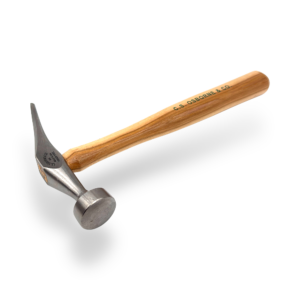
C.S. Osborne #65 Shoemaking Hammer 14 oz / 330 Gram
Reg. Price$65 – Sale Price$55 - Sale!
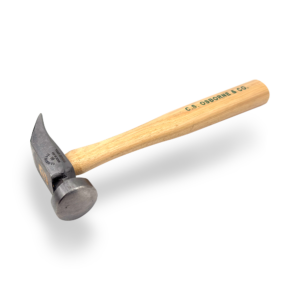
C.S. Osborne & Co. #66 Leather Working Hammer
Reg. Price$55 – Sale Price$50 - Sale!
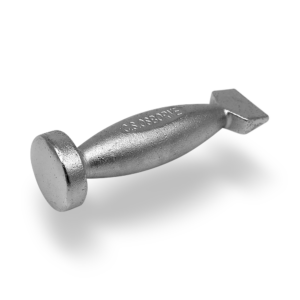
C.S. Osborne #1999 Fitters Hammer Leather Working Tool
Reg. Price$40 – Sale Price$35 - Sale!
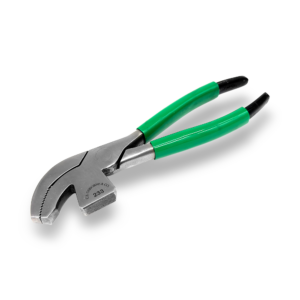
C.S. Osborne #233 Lasting Pincers
Reg. Price$75 – Sale Price$70 - Sale!
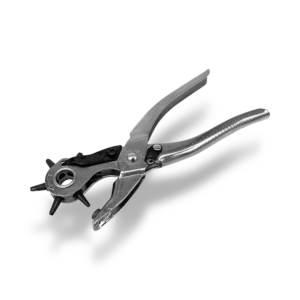
C.S. Osborne #223 Revolving Punch 6 Size Leather Hole Punch
Reg. Price$42 – Sale Price$35