





Description
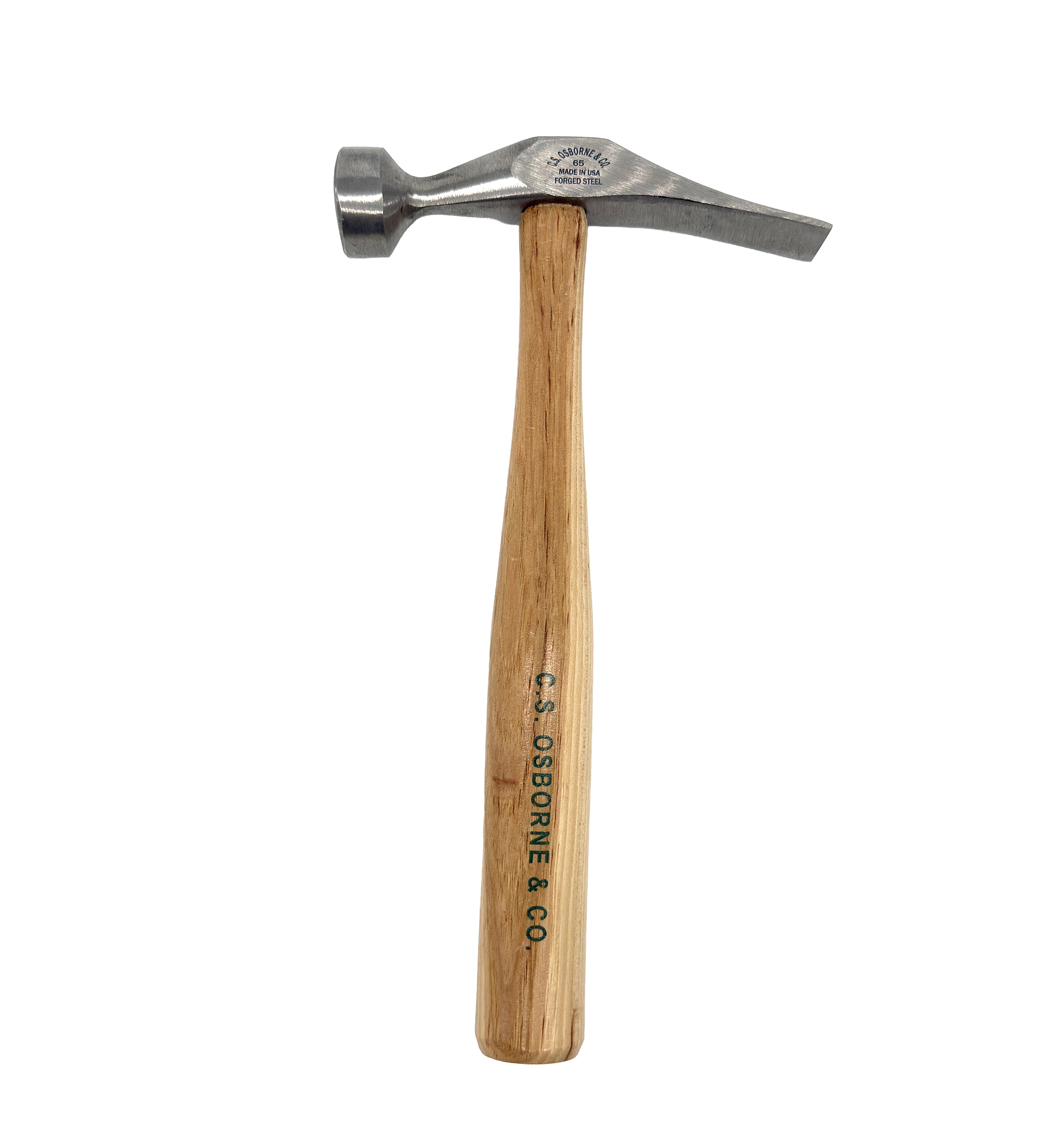
C.S. Osborne #65 Shoemaking Hammer

The C.S. Osborne #65 Shoemaking Hammer is a trusted, standard-style hammer for shoemaking, shoe repair, and leatherwork. Made with a drop-forged steel head and a highly polished finish, it is designed for clean, controlled tapping without damaging leather surfaces. This versatile tool is ideal for making sharp folds, bonding cemented parts, tapping down hand stitches, flattening lacing, and working welts.
With a 5-5/8″ head, 1-1/4″ face diameter, and 9-1/2″ handle, the #65 offers the balance and control leatherworkers and cobblers need for detailed bench work. C.S. Osborne tools are the dependable choice for professionals shoemakers and DIY home shoemaker alike.
Indispensable for shoemaking and leatherwork.
Useful for making folds, adhering cemented parts together, flattening hand stitches, lacing, welts, etc. Well-balanced and easy to use, with a solid wooden handle.
Designed for shoemakers, artisans, and craftspeople alike, the balanced weight and ergonomic handle ensure optimal control and comfort with every use. Whether you’re shaping leather, setting nails, or fine-tuning intricate details, this hammer delivers performance you need.
C.S. Osborne Shoemaking Hammer French 14oz / 330 Gram Shoe Repair Cobblers Hammer
C.S. Osborne #65 Features
Drop-Forged Steel Head
Strong professional construction designed for repeated workshop use.
Highly Polished Working Surfaces
Smooth surfaces are better suited for working finished leather.
Traditional Shoemaking Profile
Purpose-designed shape for folding, forming, flattening, and setting leather.
Compact Handle
The approximately 9-1/2″ handle provides excellent control for bench work.
1-1/4″ Round Face
A useful working surface for setting cemented parts and forming leather.
Balanced Professional Weight
The manufacturer lists the hammer at approximately 14 oz., providing useful striking power without becoming cumbersome.
Traditional C.S. Osborne Quality
A classic specialty leatherworking tool from one of America’s historic tool manufacturers.

Specifications
Can you make shoes with a regular hammer?
Yes.
But once you start using a properly designed shoe hammer, the difference becomes obvious.
An ordinary claw hammer was designed to drive construction nails.
A shoemaking hammer is designed to work leather.
The shorter handle gives you better control. The polished head is kinder to finished leather. The specialized shape lets you work folds, seams, welts, and glued components more precisely.
For serious handmade footwear, it is one of the first specialty tools worth adding to your kit.
The C.S. Osborne #65 Shoe Hammer is a traditional professional tool with a simple purpose: help you work leather accurately and efficiently.
No complicated mechanism.
No disposable parts.
Just forged steel, a polished head, a comfortable handle, and a design refined for leatherwork.
It is useful for the beginner making a first pair of shoes and equally appropriate for an experienced shoemaker, boot maker, cobbler, or leatherworker.
A good shoe hammer may last for decades.
The C.S. Osborne #65 is the kind of tool that deserves a permanent place on the shoemaker’s bench.
Fold it. Form it. Set it. Hammer it.
A shoemaking hammer needs to perform many different jobs during the construction of a shoe.
You may use it to flatten a seam one minute, secure a cemented fold the next, and then tap a welt or stitched area into position. The C.S. Osborne #65 is designed specifically for these leatherworking tasks. Use it for:The head of the Osborne #65 Shoe Hammer is made from drop-forged steel for strength and durability.
Forging helps create a strong, dense tool head capable of standing up to repeated professional use.
The head is also highly polished, creating smooth working surfaces suitable for leatherwork.
When working with expensive upper leather, smooth tools matter.
Rough or poorly finished hammer faces can leave unwanted impressions or damage the surface of the material.
The polished head of the #65 makes it much better suited to shoemaking than an ordinary carpenter’s hammer.
The distinctive shape of a traditional shoe hammer is there for a reason.
The broad round face gives you a useful striking surface for flattening, forming, and setting leather, while the opposite end allows more precise work around folds, welts, seams, and tighter areas.
Its relatively short handle gives the shoemaker excellent control at the bench.
You are usually not swinging a shoemaking hammer with maximum force.
Instead, you are making small, accurate, controlled strikes.
That balance between control and striking power is what makes a specialized shoemaking hammer so useful.
When hammering finished leather, always make sure the hammer face is clean.
A tiny piece of dried adhesive or debris stuck to the face can leave a mark in an otherwise perfect upper.Great for Folding Leather
One of the traditional jobs of the Osborne #65 is creating and setting sharp leather folds. After skiving and cementing an edge, the polished hammer head can be used to carefully set the fold. This makes the tool useful for: When hammering finished leather, always make sure the hammer face is clean. A tiny piece of dried adhesive or debris stuck to the face can leave a mark in an otherwise perfect upper. Great for Folding Leather One of the traditional jobs of the Osborne #65 is creating and setting sharp leather folds. After skiving and cementing an edge, the polished hammer head can be used to carefully set the fold. This makes the tool useful for: Folded shoe upper edges Leather facings Reinforced eye stays Bag construction Wallets Belts Small leather goods Decorative folded leather details Controlled tapping helps flatten and define the fold while bonding the cemented surfaces together.The #65 is equally useful on the cobbler’s bench.
Use it when repairing or restoring footwear for jobs such as:


Reviews
There are no reviews yet.