

What a Single Shoe Factory Photo Can Tell You About Quality
If you are building a footwear brand, developing a product, or sourcing a factory partner, one photo can reveal far more than most people realize. A picture from inside a shoe factory is not just a snapshot of production. It is a chance to evaluate systems, discipline, cleanliness, quality control, and the type of customers that factory is capable of serving.
For experienced footwear developers, factory photos are full of clues. The key is knowing what to look for. When Wade the Shoe Dog examines a factory image, he is not just admiring the shoes on the line. He is reading the environment, the process, and the standards behind the production.
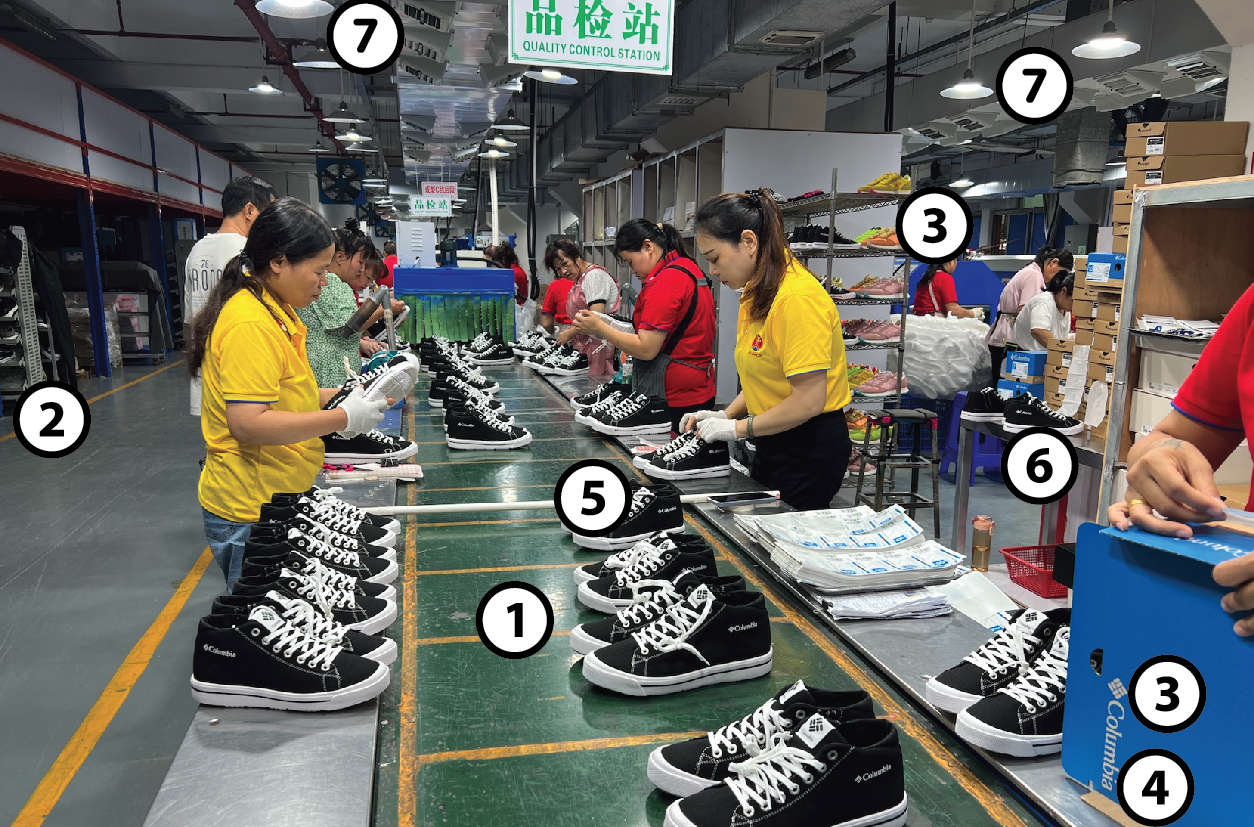
Here are some of the most important things a factory photo can tell you:
Cleanliness of the production line
A glossy, clean conveyor belt matters. If the surface touching the product is dirty, the shoes will not stay clean either. This is especially important when factories are producing light-colored footwear with white uppers or white rubber bottoms.Organization of the floor and aisles
A clean floor with no clutter is a strong sign of discipline. If materials, bags, or boxes are scattered around, it often suggests a less controlled environment. In a good factory, materials are on carts, aisles are clear, and movement is organized.The type of brands being produced
If a factory is making shoes for established international brands, that is a meaningful signal. It often suggests they have already met demanding standards for consistency, presentation, and reliability.Export markets and quality expectations
Where the shoes are going matters. If the factory is producing for markets like Japan, where quality expectations are extremely high, that can be a very positive indicator. Demanding export customers usually force factories to maintain tighter standards.Visible quality control systems
A “quality bridge” across the conveyor line is a great sign. It means every shoe must be physically picked up and inspected before it can move forward. That kind of built-in checkpoint tells you quality is part of the system, not an afterthought.Rework and correction stations
Shoes that are pulled aside for touch-ups are not necessarily a bad sign. In fact, it can mean the factory has an active feedback loop. Since shoes are made by people, minor corrections are normal. The problem is not rework. The problem is pretending perfection without inspection.Lighting, ventilation, and worker environment
Bright lighting helps workers spot stitching issues, cosmetic flaws, and material defects. Strong air handling and ventilation also matter, especially near glue stations. A well-ventilated factory using modern methods and water-based cement often reflects a more advanced and responsible production setup.
A good factory photo does not guarantee a perfect partner, but it can help you ask smarter questions. For brand builders, the lesson is simple: do not just look at the shoe. Look at the system behind the shoe. The factory environment often tells you whether a supplier is truly equipped to deliver the quality your brand needs.
