

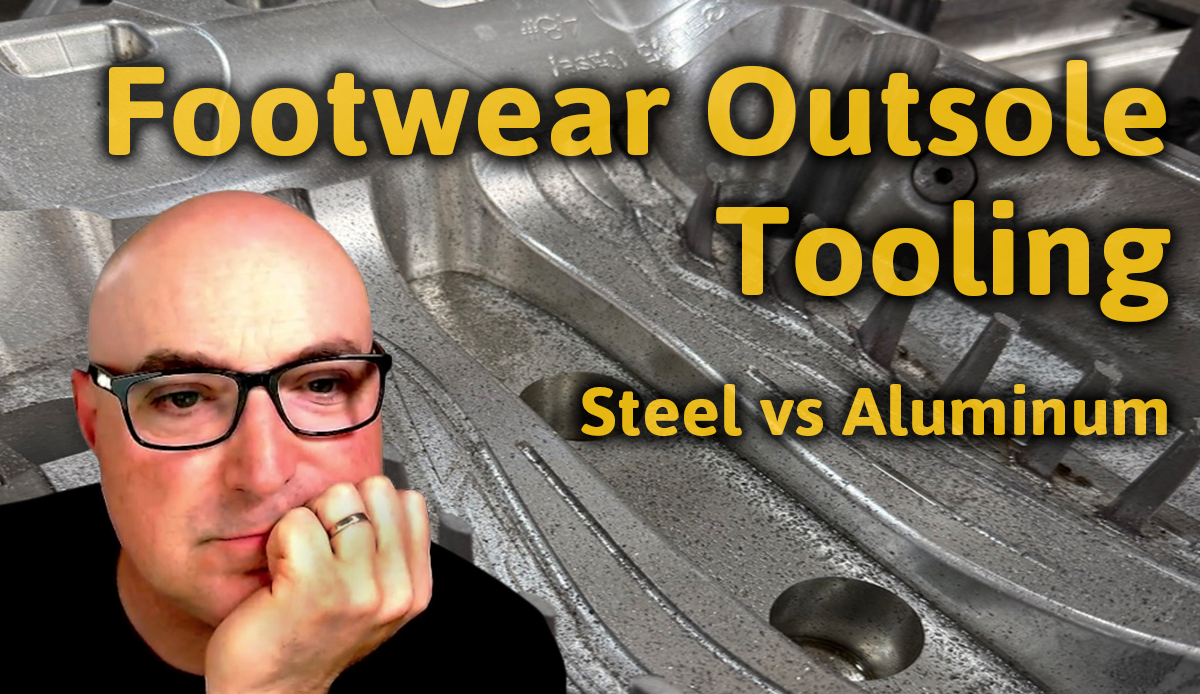
Steel vs. Aluminum Outsole Tooling
If you’re developing footwear, one tooling decision can have a major impact on cost, quality, and production speed: should your mold be made from steel or aluminum?
The truth is, there isn’t a one-size-fits-all answer. The right choice depends on the material you’re molding and the performance you need from the tooling. Understanding that difference can help you avoid expensive mistakes and build better products from the start.
In footwear manufacturing, steel and aluminum each bring unique advantages. Steel tooling is known for its strength, durability, and ability to retain heat, making it a reliable choice for materials like rubber that benefit from a consistently hot mold during curing. Aluminum tooling, by contrast, is lighter and much more thermally conductive, which makes it ideal for materials like EVA that need to heat up and cool down quickly during the molding cycle.
That’s why EVA molds are often made from aluminum. Since EVA must stabilize after expansion and before removal, fast heat transfer can improve cycle time and support better part consistency. Rubber tooling, on the other hand, is often made from steel because it performs well in high-heat curing conditions and stands up to repeated production use.
The Ultimate Footwear Tooling Guide
This decision matters more than many people realize. Choosing the right tooling material can improve efficiency, reduce waste, increase product consistency, and save money across development and manufacturing.
For footwear founders, designers, and developers, this is the kind of technical knowledge that creates a real competitive advantage.
If you want to build smarter, reduce risk, and better understand how footwear gets made, this is exactly the kind of insight that can move your brand forward. The better your tooling decisions, the better your product and your business.