



Description
Footwear Tooling Made Simple: Build Your Brand with Confidence
Build Professional Footwear Tooling Knowledge
Inside Footwear Tooling Design Guide, you’ll learn about:
- Footwear tooling design and development
- Tooling cost and productivity calculations
- Open footwear molds
- Shoe lasts
- Footwear patterns
- Cutting dies
- Outsole tooling development
- Prototype molds
- Rubber outsole molds
- EVA compression molds
- Cold-cast resin tooling
- Temporary prototype molds
- 3D-printed molds
- Plastic injection molds
- PVC and TPR tooling
- PU injection tooling
- EVA injection tooling
- Blow-molded air cushioning systems
- Footwear production fixtures
- RF welding tools
- Hot and cold pressing tools
- Screen-printing equipment
- Composite molding
- Vulcanized shoe tooling
- Tooling management
- Tooling inventory
- Mold repair and maintenance
- Tooling-free production methods
- Equipment and tooling budgets
Learn How Footwear Tooling Is Developed
A finished outsole mold may look simple, but developing it requires multiple technical decisions. The guide explains how tooling moves through the development process, including:Design → CAD Development → Prototype → Mold Construction → Testing → Corrections → Production
You’ll learn how designers, developers, mold makers, factories, and engineers work together to turn a sole concept into production-ready tooling.
This is especially valuable if you are involved in:
- Sneaker development
- Performance footwear
- Athletic shoes
- Casual footwear
- Work boots
- Molded footwear
- EVA products
- Injection-molded components

Next Step:
Footwear Tooling Design and Development
Ready to move beyond reading and see how footwear tooling decisions are made in practice? Continue with the Footwear Tooling Design and Development online course. The course expands on the book with structured video training covering outsole molds, cutting dies, prototype tooling, injection molding, tooling costs, factory communication, and tooling management.The current course includes:
- 30 technical lessons
- 6+ hours of video instruction
- Tooling design and development
- Cost and productivity calculations
- Open molds
- Shoe lasts
- Patterns and cutting dies
- Outsole tooling development
- Tooling drawings
- Prototype tooling
- Rubber and EVA compression molds
- Resin molds
- Temporary molds
- 3D-printed tooling
- Plastic injection molds
- PVC, PU, and EVA injection tooling
- Airbag blow molding
- Production fixtures
- RF welding and pressing tools
- Vulcanized shoe tooling
- Tooling management and budgeting
- A 50-point tooling design checklist
- Sample factory tooling drawings
- A digital certificate of completion
- The Footwear Tooling Design Guide eBook included as bonus content
Build a Professional Tooling Skill Set
CHAPTER 1: TOOLING DESIGN, DEVELOPMENT, & COSTING
– Understanding the role of tooling in footwear manufacturing
– Essential tooling requirements for modern shoe production
– Designing and developing tooling for efficiency
CHAPTER 2: TOOLING COST AND PRODUCTIVITY CALCULATIONS
– The financial impact of tooling on a footwear brand
– Calculating costs, amortization, and production efficiency
– Forecasting sales vs. tooling investment for profitability
– Understanding mold productivity and return on investment
CHAPTER 3: WHAT ABOUT OPEN FOOTWEAR MOLDS?
– The pros and cons of using open molds in footwear production
– Key considerations: last design, sizing, and quality control
– How open molds affect branding and exclusivity
– When and why to invest in proprietary tooling
CHAPTER 4: THE SHOE LAST IS EQUIPMENT
– The role of shoe lasts in footwear design and manufacturing
– Types of lasts: plastic, metal, CNC-milled
– How lasts impact fit, style, and production efficiency
CHAPTER 5: CREATING YOUR FOOTWEAR PATTERN
– The importance of pattern-making in shoe development
– How patterns define shoe construction and material needs
– Traditional vs. digital pattern-making techniques
CHAPTER 6: MAKING FOOTWEAR CUTTING DIES
– What cutting dies are and why they’re essential in mass production
– The process of creating and testing cutting dies
– Types of cutting dies: steel rule, CNC, and precision-cut dies
CHAPTER 7: OUTSOLE TOOLING DEVELOPMENT PROCESS
– How outsoles are designed and tooled for durability and style
– The role of 3D scanning and CAD modeling in outsole creation
– Step-by-step guide to developing outsole molds
CHAPTER 8: BUILDING PROTOTYPE TOOLING
– The importance of prototyping before full-scale production
– Creating temporary molds for testing new designs
– 3D printing and resin molds for prototype validation
CHAPTER 9: RUBBER OUTSOLE & EVA COMPRESSION MOLDS
– Understanding rubber pressing and EVA compression techniques
– How these molds impact durability, flexibility, and performance
– The process of creating and refining compression molds
CHAPTER 10: COLD CAST RESIN FOOTWEAR TOOLING
– What cold cast resin molds are and when to use them
– Benefits and limitations of resin molds in footwear production
– How resin molds compare to metal and injection tooling
CHAPTER 11: TEMPORARY PROTOTYPE MOLDS
– Why temporary molds are critical for testing and refinement
– Creating low-cost molds before full-scale production
– Pros and cons of various temporary mold materials
CHAPTER 12: 3D PRINTED OUTSOLE TOOLING
– How 3D printing is revolutionizing outsole development
– The benefits of rapid prototyping in footwear tooling
– Comparing 3D printing to traditional mold-making methods
CHAPTER 13: PLASTIC INJECTION MOLDS FOR FOOTWEAR
– The role of plastic injection molding in footwear production
– How injection molds shape key shoe components
– Cost and material considerations for injection molding
CHAPTER 14: PVC & TPR OUTSOLE INJECTION MOLDS
– Understanding the use of PVC and TPR in footwear outsoles
– How injection molding creates durable and flexible outsoles
– The manufacturing process for PVC and TPR tooling
CHAPTER 15: PVC OUTSOLE DIRECT INJECTION
– The direct injection process for PVC outsoles
– Benefits of direct injection vs. traditional molding
– How to optimize tooling for direct injection efficiency
CHAPTER 16: PU FOAM DIRECT INJECTION
– How polyurethane (PU) foam is used in footwear midsoles
– The direct injection process for PU components
– Pros and cons of PU direct injection for performance shoes
CHAPTER 17: PU OUTSOLE INJECTION
– What makes PU outsoles a popular choice for footwear
– The injection molding process for PU outsoles
– Key design considerations for PU outsole molds
CHAPTER 18: EVA INJECTION MOLDS
– How EVA injection molds differ from compression molds
– The benefits of EVA injection for lightweight cushioning
– Mold design and production workflow for EVA tooling
CHAPTER 19: BLOW MOLDING AIRBAGS
– How blow molding is used to create cushioning air units
– The process of developing and refining airbag molds
CHAPTER 20: FOOTWEAR PRODUCTION FIXTURES
– The role of fixtures in shoe manufacturing and assembly
– Different types of fixtures for efficiency and quality control
CHAPTER 21: RADIO FREQUENCY WELDING TOOLS
– How RF welding is used in footwear manufacturing
– Applications for RF welding in synthetic materials
CHAPTER 22: HOT & COLD PRESSING TOOLS
– Understanding hot and cold pressing in footwear tooling
– When to use each method for different materials
CHAPTER 23: SILK SCREEN PRINTING EQUIPMENT
– The role of silk screen printing in footwear branding
– How to design and implement print tooling
CHAPTER 24: COMPOSITE MOLDING FOR SHOES
– How composite materials are molded in footwear production
– Comparing composite molding to traditional shoe tooling
CHAPTER 25: VULCANIZED SHOE PRODUCTION TOOLING
– The tooling process for vulcanized footwear
– How vulcanization differs from cold cement construction
CHAPTER 26: MANAGING YOUR TOOLING
– The importance of proper tooling management
– Avoiding common mistakes in tooling management
CHAPTER 27: CONTROLLING YOUR TOOLING INVENTORY
– Why inventory management matters for tooling longevity
– Preventing loss and damage in tooling inventory
CHAPTER 28: FOOTWEAR TOOLING CARE & REPAIRS
– Best practices for maintaining and repairing molds
CHAPTER 29: FOOTWEAR WITHOUT TOOLING
– Exploring no-tooling footwear production methods
– Pros and cons of producing footwear without traditional molds
CHAPTER 30: FOOTWEAR TOOLING REQUIREMENTS AND COSTS
– A final breakdown of tooling needs and costs
– Budgeting strategies for footwear brands
– Making smart investments in tooling development
CHAPTER 31: BUILDING EQUIPMENT BUDGETS
– How to estimate tooling and equipment costs before production
– Strategies for creating an accurate tooling budget for your footwear brand
Outsoles and midsoles often require some of the largest tooling investments in a footwear project.
The book explains how different tooling systems are used for materials and processes such as:
- Rubber compression molding
- EVA compression molding
- EVA injection
- PU injection
- PVC injection
- TPR injection
- Direct injection
- Airbag blow molding
- Composite molding
Understanding these processes helps you make better decisions about design complexity, tooling cost, production volume, material choice, and manufacturing method.
A beautiful sole design still has to be manufacturable.
The guide helps you understand how tooling decisions affect:
- Mold construction
- Part geometry
- Draft angles
- Undercuts
- Wall thickness
- Surface textures
- Logo details
- Parting lines
- Venting
- Mold release
- Production efficiency
- Quality consistency
This knowledge can help footwear designers avoid creating concepts that are unnecessarily expensive or difficult to manufacture.
One of the most useful skills in footwear development is knowing when not to invest in expensive production tooling too early.
The book covers multiple prototype methods, including:
- Temporary molds
- Resin tooling
- 3D-printed prototypes
- Low-cost development tooling
- Prototype outsole molds
Prototype tooling allows footwear teams to evaluate fit, geometry, appearance, and performance before committing to final production molds.
That can reduce development risk and help prevent expensive tooling changes later in the process.
Tooling is not only an engineering decision. It is also a business decision.
The book explains how to think about:
- Tooling investment
- Mold costs
- Productivity
- Amortization
- Production volume
- Cost per pair
- Sales forecasts
- Return on investment
- Equipment budgeting
This is particularly valuable for footwear entrepreneurs and brand founders, because a tooling program that looks reasonable technically may still be unrealistic financially.
The book specifically covers forecasting sales against tooling investment and evaluating mold productivity and profitability.
Not every shoe requires a custom outsole.
Open molds can reduce development expense and help smaller footwear brands reach the market more quickly.
But they can also create limitations around:
- Fit
- Sizing
- Branding
- Design control
- Product differentiation
- Quality
- Exclusivity
The book examines when open tooling can make sense and when investing in proprietary molds may be a better long-term decision.
The footwear last is not just a design shape.
It is a critical piece of manufacturing equipment that determines much of the shoe’s:
- Fit
- Shape
- Proportion
- Toe profile
- Heel geometry
- Production compatibility
The guide examines different last types and how last design connects to pattern development, outsole tooling, fit, and production efficiency.
Creating a mold is only the beginning.
Footwear brands also need systems for managing tooling once production begins.
The book includes guidance on:
- Tooling ownership
- Tooling identification
- Inventory control
- Storage
- Maintenance
- Repair
- Mold longevity
- Preventing loss or damage
- Factory tooling management
These subjects become especially important as a brand grows and accumulates molds across multiple styles, sizes, factories, and countries.
Tooling knowledge is one of the more specialized technical skill sets in footwear.
That makes this book especially useful for professionals who want to deepen their understanding of how footwear is engineered and manufactured.
It is relevant for careers in:
Footwear Design
Understand how your outsole and midsole ideas translate into production tooling.
Footwear Development
Manage tooling schedules, costs, corrections, prototypes, and production approvals.
Footwear Engineering
Build stronger knowledge of molds, materials, manufacturing systems, and production requirements.
Product Management
Understand how tooling choices affect product cost, launch timing, and margins.
Footwear Sourcing
Evaluate tooling suppliers, costs, timelines, and factory capabilities.
Manufacturing
Understand the tools and fixtures required to produce footwear efficiently.
Footwear Entrepreneurship
Avoid expensive tooling mistakes when launching a shoe brand.
Students and Career Changers
Develop technical footwear vocabulary and manufacturing knowledge that is difficult to learn from design education alone.
The book is positioned specifically for brand owners, designers, and product developers who need to make better tooling decisions and work more effectively with factories.
The course is led by Wade Motawi and is built around practical footwear-industry experience with tooling investment, mold development, factory production, and cost control.
It includes examples of cast steel tooling, CNC-machined aluminum, compression molding, injection molding, and factory tooling processes.
Title: Footwear Tooling Design, Development and Costing
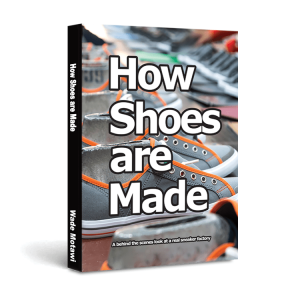
Series: How Shoes are Made (Book 6)
Publisher: Shoemakers Media llc (March, 15, 2025)
Language: English
Paperback: 415 pages
ISBN-10: 1735883336
ISBN-13: 978-1-7358833-6-6
Item Weight: 1.6 pounds
Dimensions: 8.5 x 1 x 11 inches


Victor –
Thank you for always replying. I follow you on you tube. You’re such a great resource to the sneaker community. I appreciate you so much. Thank you again. -Victor
K.M. –
Great pictures and easy to understand. 5-stars
Mick –
Excellent resource. Nothing else like this out there. Easy to understand. Highly recommend.